How to Stand Out at a Trade Show Booth and Attract Visitors
How to stand out at a trade show booth and attract the right visitors: pre-show outreach, booth design, a clear value message, staff openers, demos, and capture.
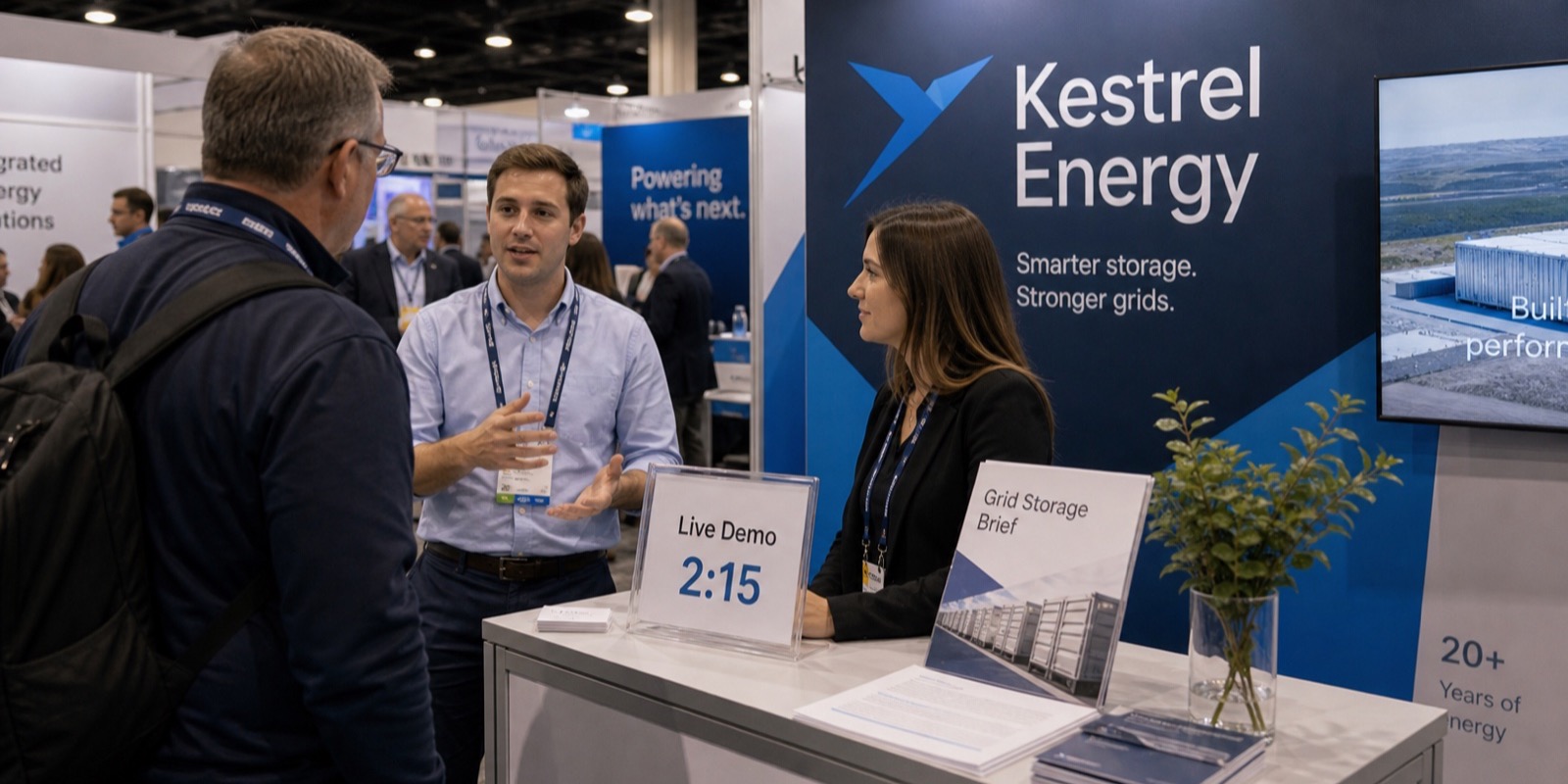
Standing out on a show floor isn't about a bigger booth or a louder banner. It's about being legible from a distance and easy to approach up close. The exhibitors who pull a crowd tend to do a few things well. They tell people why they should care in a few words. They get the right buyers to plan a visit before the doors open. And they make the first ten seconds of every conversation feel natural instead of forced.
This post covers how to attract booth traffic and turn that attention into captured leads. The focus is getting the right people to stop, not the mechanics of scanning them in. Where capture matters, I'll keep it short and point you to the deeper guides.
Why most booths blend in (and what makes one stand out)
Walk any show floor and you'll see the same pattern. Rows of booths with the company name across the top, a few product shots, a screen looping a video nobody's watching, and two reps behind a table looking at their phones. None of it is wrong, exactly. It just gives a passerby no reason to break stride.
A booth stands out when someone walking the aisle at normal speed can answer one question without slowing down: what does this company do for someone like me? That's it. Not your full product line, not your mission statement. One specific promise they can read from eight feet away, plus a reason to step closer. Everything else in this post serves that one goal.
How to drive booth visits before the show even starts
Exhibitors with steady traffic don't leave it to chance on the floor. They line up visits in the weeks before the show, because a prospect who already planned to stop by is worth ten who wandered past. Pre-show outreach is the highest-leverage thing you can do, and most teams underinvest in it.
- Email your own list with a specific reason to visit: a new product, a demo time, or a problem you'll solve at the booth. Skip the bare "come see us at booth 412" with no hook.
- Book meetings in advance. Even ten confirmed slots change the energy of the whole booth and give reps something to anchor the day around.
- Use the show's attendee marketing if it's offered. Many organizers sell pre-show email blasts or app placements that reach registered attendees by industry or job role.
- Post your booth number and your one value message on LinkedIn the week before, and tag the show. People planning their route actually look.
- Reach out to pipeline prospects who registered. A face-to-face at the show can move a stalled deal faster than three more calls.
Booth design, sightlines, and lighting that pull people in
Most booth design advice is about looking impressive. The more useful goal is being readable and open. An attendee decides whether to approach in the time it takes to walk past, so design for that glance, not for the photo you'll post afterward.
Keep the front of your booth open. A table across the entrance is a barrier, and reps standing behind it read as a counter you have to transact at. Pull the table to the side or the back, leave the front clear, and let people step in. Light the booth brighter than the aisle, with the light aimed at your product and your people, not just a glowing logo overhead. Shadowed booths feel closed even when they're fully staffed.
- Put your one value message high and large, in plain words a non-expert understands, not a clever tagline that needs explaining.
- Keep the floor space open at the front so people can walk in instead of being met by a table.
- Light faces and product at eye level. A bright header logo alone leaves the working area dim.
- Cut the clutter. Three product shots people read beat twelve they ignore.
- Give reps room to stand and move. A booth packed with furniture pushes staff to the back.
How to write a value message a passerby can read in three seconds
This is the single highest-return thing on your booth, and it's usually the weakest. Your main sign should say what you do and who it's for, in words someone outside your industry could repeat. "We help X do Y" works. Your company name in giant letters does not, because the name tells a stranger nothing.
Test it the honest way. Stand across the aisle, look at your own booth for three seconds, then look away. Can you say what the company sells and why it matters? If you can't, neither can the buyer you're trying to attract. Specific beats clever. A sign that says "Cut warehouse picking errors in half" stops the right person. "Reimagining fulfillment" stops no one.
The three-second test
A passerby walking at normal speed should be able to read your main booth message, understand what you do and who it's for, and decide whether it's relevant to them, all without stopping. If your headline needs a second sentence to make sense, it fails the test.
How staff positioning and a good opening line attract visitors
Your people matter more than your graphics. A great booth with reps clustered in the back, talking to each other, loses to a plain booth with one person standing at the edge making eye contact. Where staff stand and how they open is most of the difference between a busy booth and an empty one.
Position reps at the front edge of the booth, facing the aisle, standing rather than seated. Open posture, no crossed arms, no phones, no eating at the booth. The body language reads as approachable before anyone says a word. Then give every rep a real opening line that isn't "How are you today?" or "Can I help you?", both of which trigger an automatic "just looking."
- Lead with a relevant question or observation. "Are you dealing with the new labeling rules too?" beats a generic greeting.
- Reference the value message on your sign so the opener connects to what they just read.
- Give people room. Standing at the very edge invites a hello. Stepping into the aisle to intercept makes people speed up.
- Rotate reps off the floor on a schedule. Tired, hungry staff stop making eye contact, and it shows.
- Brief the whole team on the same two or three openers so it doesn't depend on who's standing there.
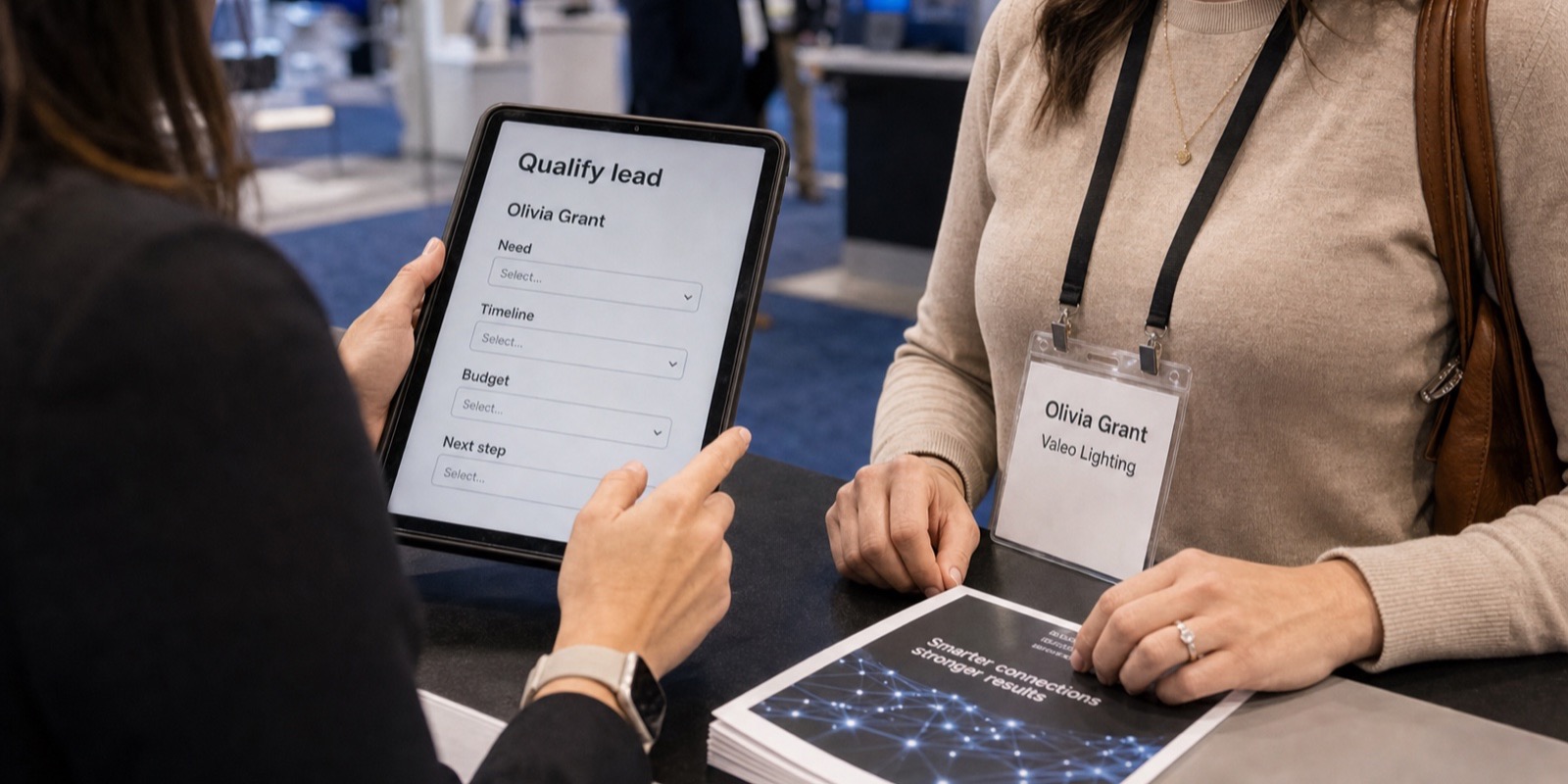
Once someone stops, your reps need a fast way to figure out who's worth real time. That's a separate skill, and worth getting right. The best questions to qualify trade show leads covers what to ask so you spend your floor time on actual buyers.
Live demos, interactivity, and giveaways that attract the right buyers
People stop for motion and for things they can do, not for things to read. A live demo of your product solving a real problem is the strongest magnet on the floor, because it shows value instead of claiming it. Whether your product is software or physical, get it in front of people and let them touch it. Even a short, repeatable demo on a loop, narrated by a rep, draws a small crowd that draws a bigger one.
Giveaways are where most booths go wrong. A bowl of branded pens or a prize wheel pulls a crowd, but it's the wrong crowd: swag collectors who scan in, grab the thing, and never open your email. Traffic for its own sake isn't the goal. Traffic from people who can actually buy is.
| Attracts the right buyers | Attracts swag collectors |
|---|---|
| A giveaway tied to your product or industry (a useful guide, a relevant tool) | Generic swag anyone wants (pens, totes, candy) |
| A prize worth giving only after a real conversation or demo | A spin-the-wheel that pays out for a badge scan alone |
| Something specific to a job role you sell to | Something with universal appeal and no qualifying value |
| A drawing entered by answering one qualifying question | A fishbowl that collects every badge in the hall |
Giveaways that filter for buyers vs. giveaways that attract swag collectors
If you run a drawing, gate the entry behind a qualifying question or a short demo. That one step turns a giveaway from a swag magnet into a filter. You'll capture fewer names, and far more of them will be worth following up on.
Turn the attention into captured leads, fast
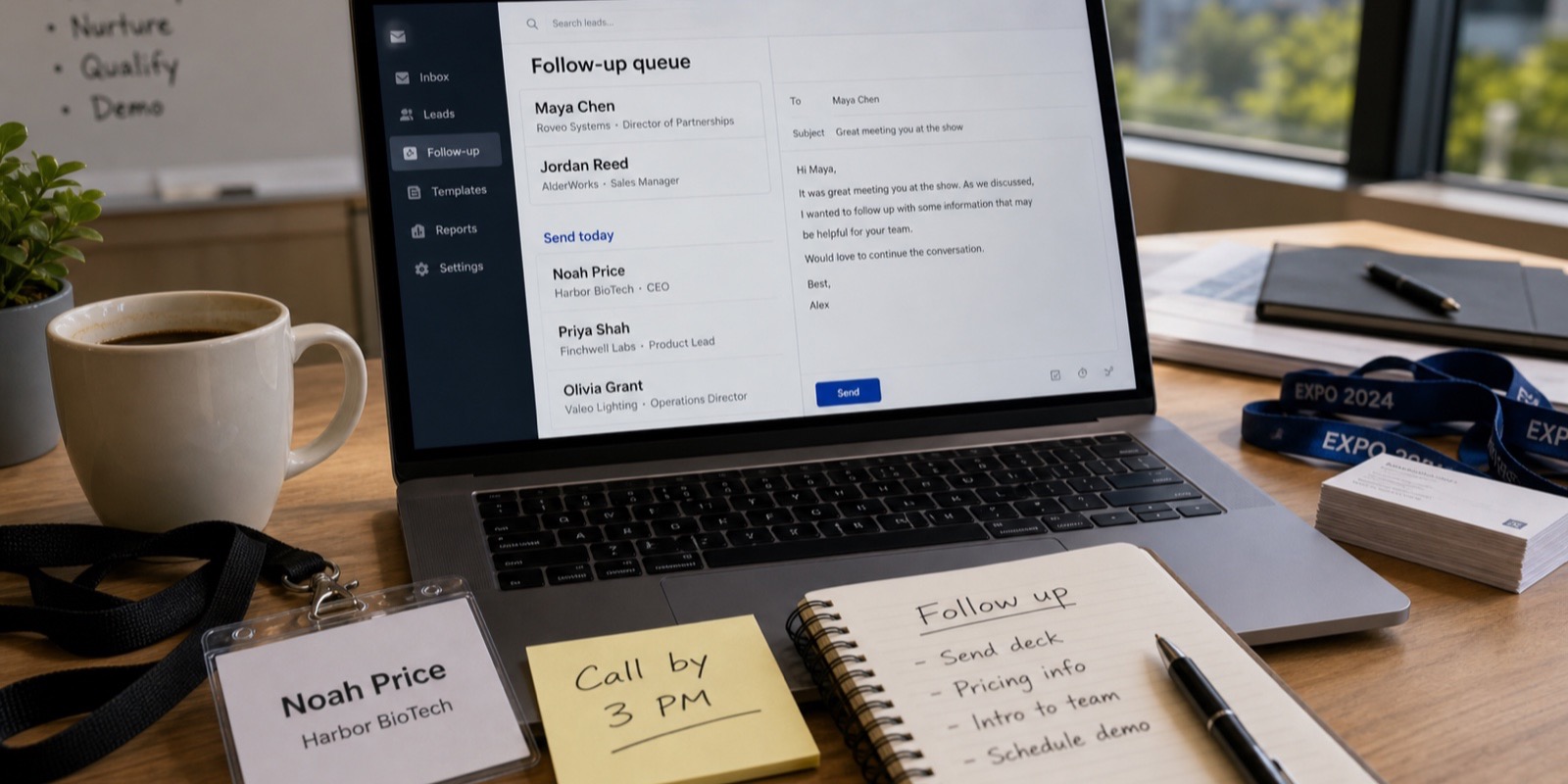
Attracting traffic is wasted if the lead never makes it into a system you can act on. The window is short. A rep who has a good conversation and means to "write it down later" loses the details by the third visitor, and the badge scan alone won't remember what the person actually wanted.
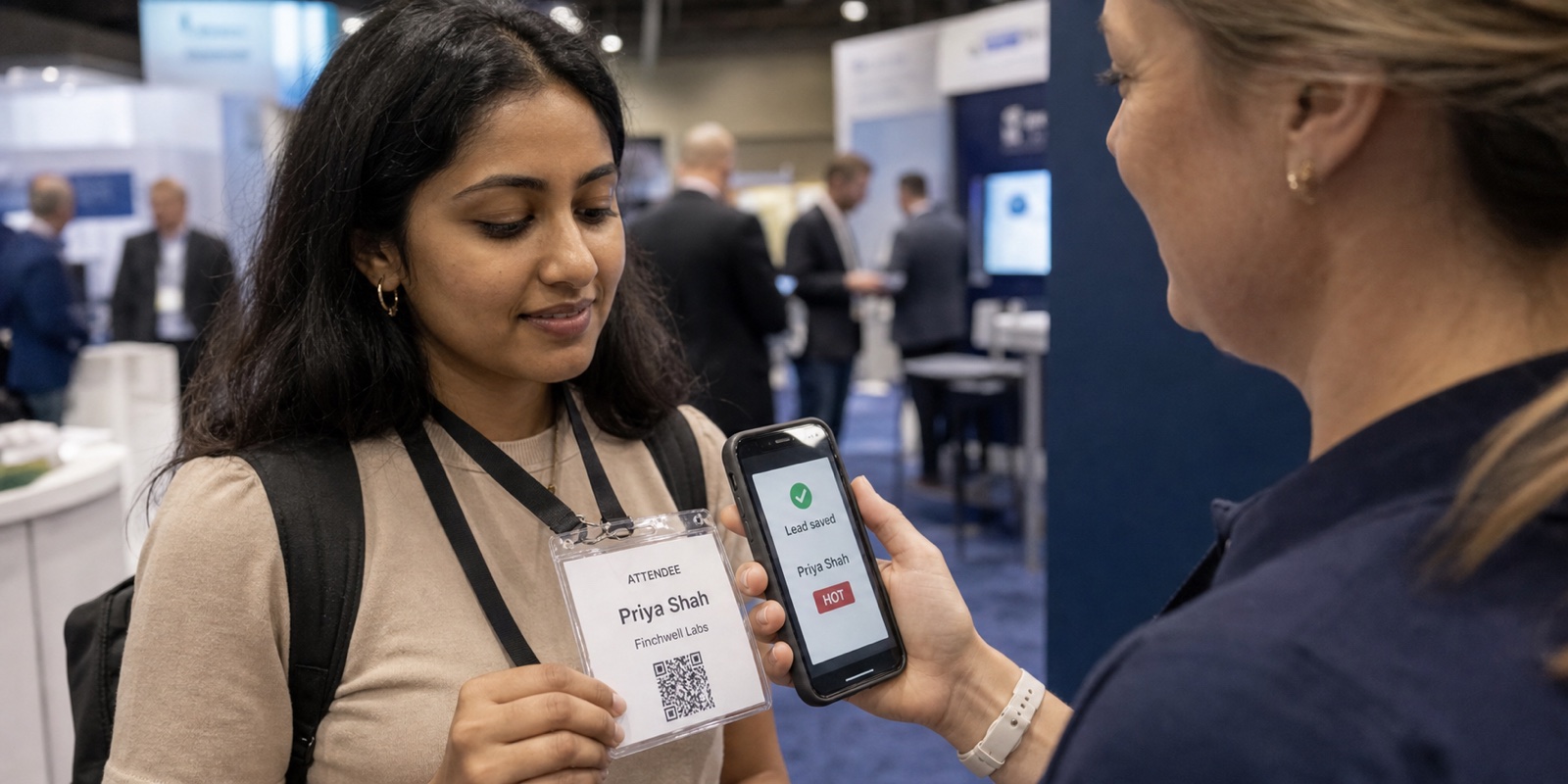
Capture each lead in the moment, while the conversation is fresh, and add the context the badge can't carry: what they asked about, their timeline, the next step. Keep capture quick so it doesn't kill the conversation or back up a line at your booth. The full playbook is in how to capture leads without slowing down your booth.
This is where a tool earns its keep. With XPO's lead capture app, staff scan a badge on an iPhone or iPad, answer a couple of qualifying questions set up for that event, and move on. Capture works offline and syncs when the signal returns, and a duplicate scan never creates a duplicate lead. Qualified leads sync to your CRM automatically the same day, so the warmth you built on the floor doesn't cool off in a spreadsheet. XPO is newer to market than most badge-company scanners, but the capture-to-CRM speed is the point.
The alternative has its own price tag. According to Maritz exhibitor order forms (KBIS 2024, PRI Show 2025, and IPPE 2026), official SWAP badge scanners and app packages ran roughly $375 to $685 per event depending on the show and how early you ordered, and a developer's kit or API for real-time data was about $950. Rented hardware adds its own risk: per CompuSystems, a scanner returned late can incur a $100 late fee, and a lost unit can cost up to $1,500 to replace. The breakdown lives in what lead retrieval actually is and costs.
Frequently asked questions
How do you stand out at a trade show booth on a small budget?
You don't need a big booth to stand out. The cheapest high-impact moves are a clear value message a passerby can read in three seconds, staff standing at the front edge with a real opening line, and a short live demo of your product solving a real problem. Pull your table to the side so the front is open, light your space brighter than the aisle, and book a few meetings before the show. None of that costs much, and all of it beats spending money on a flashier banner that still doesn't say what you do.
What's the best way to attract the right buyers and not just swag collectors?
Tie your attraction to your product, not to generic swag. A live demo, an industry-specific giveaway, or a drawing you enter by answering one qualifying question all filter for people who can actually buy. A bowl of pens or a prize wheel that pays out for a badge scan pulls a crowd, but it's mostly people who'll grab the freebie and ignore your follow-up. You'll capture fewer names by gating giveaways behind a real conversation, and a much higher share of them will be worth your time afterward.
How important is pre-show promotion for booth traffic?
It's usually the difference between a busy booth and a quiet one. A prospect who already planned to visit is worth many who wander past, and booked meetings give your whole booth momentum and your reps something to anchor the day around. Email your list with a specific reason to stop by, book demo slots in advance, use the organizer's attendee marketing if it's offered, and reach out to pipeline prospects who registered. Set a target number of pre-booked meetings and assign someone to own it, so it's a plan and not a hope.
What should booth staff say to get people to stop?
Skip "How are you today?" and "Can I help you?", because both trigger an automatic "just looking." Lead with a relevant question or observation tied to what your sign promises, like "Are you dealing with the new labeling rules too?" Have reps stand at the front edge of the booth facing the aisle, with open posture and no phones, so the body language reads as approachable before anyone speaks. Brief the whole team on the same two or three openers so it doesn't depend on who's standing there, and rotate people off the floor before they get tired and stop making eye contact.
How do you turn booth traffic into actual leads?
Capture each person in the moment, while the conversation is fresh, and add what the badge can't tell you: what they asked about, their timeline, and the next step. The badge scan alone won't remember any of that, and a rep who waits to write it down loses the details by the third visitor. Keep capture quick so it doesn't stall the conversation or back up a line. Tools like XPO let staff scan a badge and answer a couple of qualifying questions on a phone or tablet, then sync qualified leads to your CRM the same day, so the interest you built on the floor doesn't go cold in a notebook.
Does booth location matter as much as design?
Location helps, but design and staff matter more than most exhibitors think. A booth near a main entrance or a busy intersection gets more foot traffic by default, and it's worth requesting good placement when you book. That said, a well-located booth with a vague sign and reps sitting in the back will lose to a plain corner booth that's legible from the aisle and staffed by people standing at the edge with a clear opener. You can't always control where you land on the floor, so put your effort into the things you can control: the message, the sightlines, the lighting, and the people.