Best Questions to Ask Prospects at a Trade Show to Qualify Leads
The best trade show qualifying questions to ask at your booth, grouped by role, need, timeline, budget, and fit, with example wording and what each answer reveals.
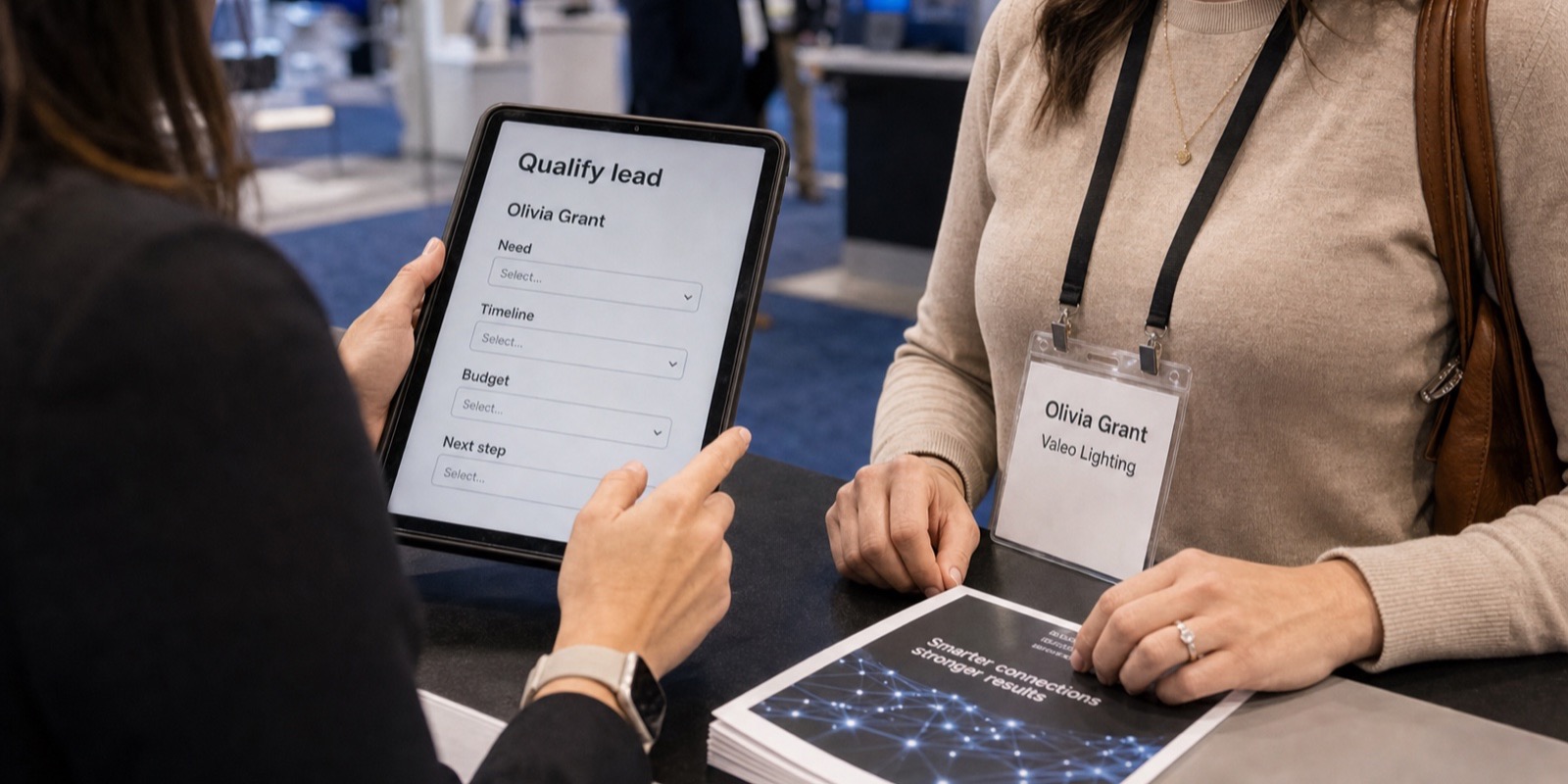
The hard part of qualifying at a booth isn't knowing what you want to learn. It's getting it out of someone in two minutes without making them feel processed. A good conversation surfaces role, need, timeline, budget, and fit, but it sounds like two people talking, not a rep running a survey.
Below are the actual trade show qualifying questions, grouped by what each one tells you, with the wording that works and the wording that kills the conversation. Use them to build a short set of taps in your capture app so reps record answers in the moment instead of scribbling notes and forgetting which lead said what.
Why the questions matter more than the form
You can collect a clean badge scan and still have no idea whether a lead is worth a follow-up call. The scan gives you a name and a company. The conversation gives you intent, urgency, and authority, and those are what your sales team actually scores on later.
There's a real tradeoff at a booth. Every question costs time and attention, and the line behind this person is growing. So you don't ask everything. You ask the four or five questions that move someone from "badge in a pile" to "call this one Monday," and you let the rest go.
Who you're actually talking to
Asking "are you the decision maker?" almost never works. People either inflate their role or get defensive. Ask about the buying process instead, and authority falls out of the answer on its own.
- "What's your role on the team there?" Tells you function and seniority without putting anyone on the spot.
- "Who else would be involved in a decision like this?" A strong answer names two or three people or a committee. "Just me" from a small company is also strong. "My boss handles that" tells you to ask for the boss.
- "Are you the one who'd run this day to day, or are you scoping it for someone?" Separates the user from the buyer. Both matter, but you follow up with each differently.
What you're listening for is whether this person can either say yes or get you to the person who can. An influencer who loves what you do is worth keeping. You just route them differently than a VP with a signed budget.
Need and pain: what problem brought them here
This is the question that should come first, before anything about budget or title. Most people walk a show floor because something is broken or about to be. Get them describing the problem in their own words and the rest of the conversation opens up.
- "What brought you over to the booth?" Open-ended, low pressure, and it surfaces intent fast.
- "What are you using for this now?" A named competitor or a clunky internal process is a strong buying signal. "Nothing yet" means you're educating, which is slower.
- "What's the part of that that's actually frustrating?" Moves from feature talk to pain, which is where urgency lives.
A weak answer sounds like "just looking" or "my manager told me to check this category out." That's not a dead lead, but it's early. A strong answer names a specific problem they own and are annoyed by. Write down the exact phrase they use, because it's the line your follow-up email should echo.
Timeline and budget, without the interrogation
Timeline and budget feel most like an interrogation, so they go last and they go sideways. Don't ask "what's your budget?" cold. Ask about the project's shape and the numbers tend to reveal themselves.
- "Is this something you're looking at for this quarter, or further out?" Easy to answer, and it sorts now from someday.
- "Is there a deadline driving it, like a renewal or a launch?" A named date is one of the strongest qualifiers you'll get all show.
- "Have you scoped what something like this usually runs?" Softer than asking their budget, and the answer tells you whether they've done homework or are window-shopping.
Fit: are they someone you can actually sell to
Fit is the qualifier reps skip and regret. A friendly, high-intent lead who's the wrong company size or in a region you don't serve will eat hours of follow-up and close nothing. A couple of light questions catch it early.
- "How big is the team that'd use this?" Stands in for company size and deal size without asking revenue.
- "Where are you based?" Quick territory and region check.
- "Are you in [industry] specifically, or somewhere adjacent?" Confirms they're in your lane before you invest in them.
None of these are deal-breakers on their own. They're context. A lead who's slightly outside your usual profile but has a real, urgent problem can still be worth a conversation. The point is to know which it is before you've spent your best follow-up energy on it.
Your trade show qualifying questions at a glance
| Question | What it reveals | Strong answer sounds like |
|---|---|---|
| What brought you over? | Need and intent | A specific problem they own |
| What are you using now? | Need, competitive context | Names a current tool or a painful manual process |
| Who else would be involved in a decision? | Buying authority | Names a few people, or "just me" at a small company |
| Is this for this quarter or further out? | Timeline | A near-term window or a named deadline |
| Is there a deadline driving it? | Urgency | A renewal, launch, or budget cycle date |
| How big is the team that'd use this? | Fit, deal size | Maps to your typical customer size |
| Where are you based? | Fit, territory | Inside a region you serve |
What each booth question is really measuring.
Pick a handful of these for a given show. Don't run all seven on every visitor. The mix depends on what you sell and who walks your floor, and you'll adjust it after the first morning once you hear what people actually respond to.
Turn your questions into taps, not handwriting
The best wording in the world is wasted if the answer never gets recorded. Reps don't write things down mid-conversation, and the notes they do scribble are unreadable by the time the show ends. The fix is to make answering a tap.
- Pick your questions before the show, grouped by role, need, timeline, budget, and fit.
- Set them up as fields in your capture app: yes/no for authority, multi-select for current tool, a short list for timeline.
- Have reps ask the question naturally, then tap the answer while the badge scan is still on screen.
- Review the answers the same day, while the conversation is fresh enough to add a note where it matters.
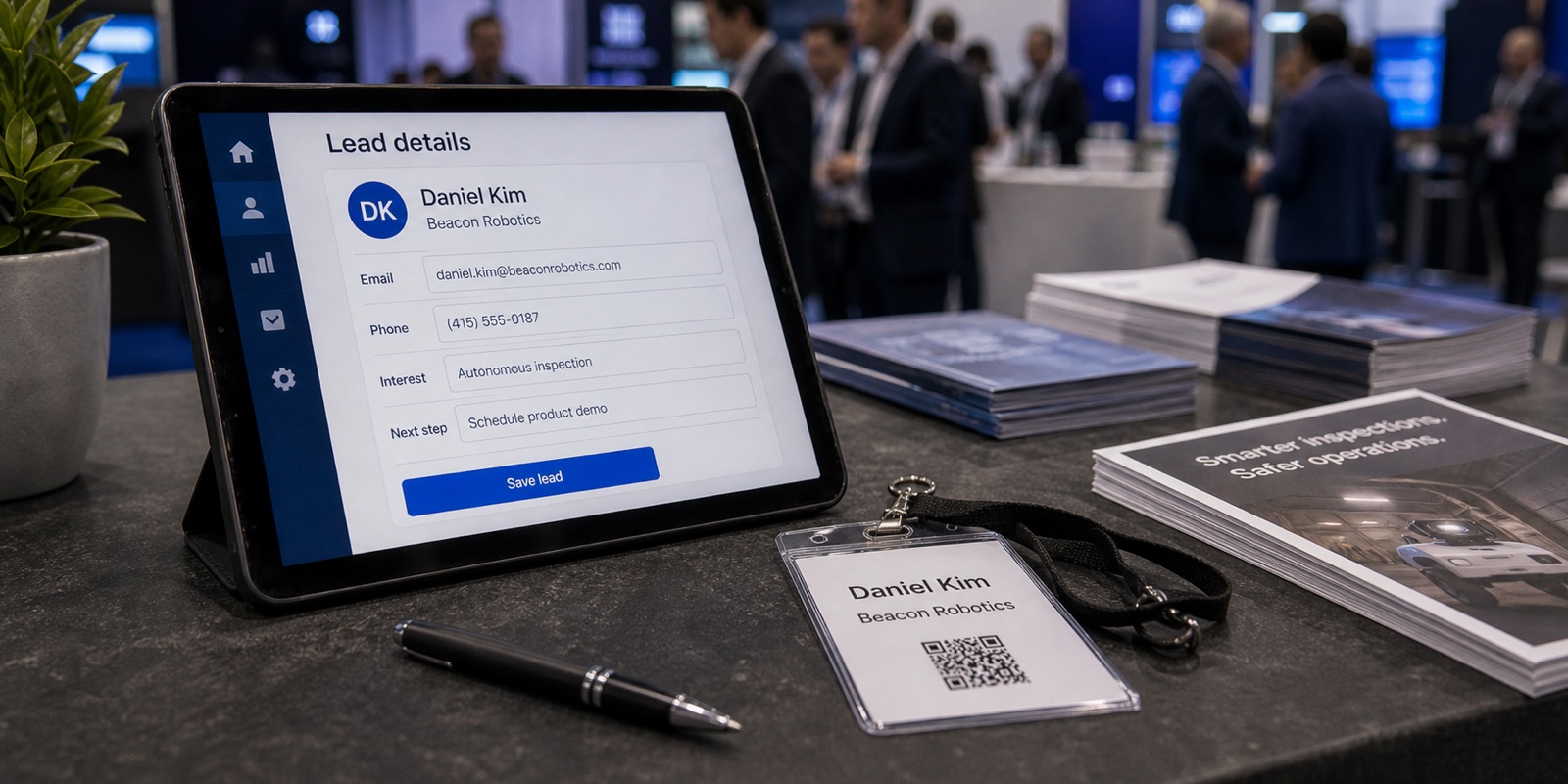
In XPO, qualifying questions are configured per event as text, number, yes/no, or multi-select fields, and answers are validated as they come in. A rep scans a badge on an iPhone or iPad, taps through the questions, and the lead is captured even offline, syncing when the signal returns. AI cleans up each record on capture, so there's no manual cleanup after the show, and qualified leads sync to your CRM the same day. See how a booth setup works or try a live capture screen.
Set up well, this also keeps your booth moving. The questions are short, the answers are taps, and nobody's standing around while a rep writes a paragraph. If throughput is your worry, capturing leads without slowing down the booth goes deeper on pacing.
Frequently asked questions
How many qualifying questions should I ask at a trade show booth?
Plan for five or six, and expect to use three or four with any given visitor. A booth conversation runs two or three minutes, and every question competes with the line forming behind the person. Lead with the open question about what brought them over, then ask only the follow-ups that genuinely change how you'd rate the lead. If someone is clearly hot, stop qualifying and book the next step. If they're early, a couple of questions is plenty to file them correctly and move on.
What's the best opening question to qualify a lead at a trade show?
"What brought you over to the booth?" is hard to beat. It's open-ended, takes no effort to answer, and surfaces intent before you've said a word about your product. People will tell you their problem, what they're using now, and sometimes their timeline, all in one reply. Compare that to "Are you the decision maker?" which makes people defensive and tells you almost nothing. Open with the problem. You can sort out role, budget, and fit once they're already talking.
How do I ask about budget without scaring the prospect off?
Don't ask for a number cold. At a booth you rarely get a real budget anyway, and pushing for one stalls the conversation. Ask about the shape of the project instead: "Is this for this quarter or further out?" and "Have you scoped what something like this usually runs?" A timeline plus an active project tells you almost as much as a dollar figure, and it's far easier to answer in public. Confirm the actual budget later, on the follow-up call, when you have their full attention.
How is asking qualifying questions different from scoring or collecting data?
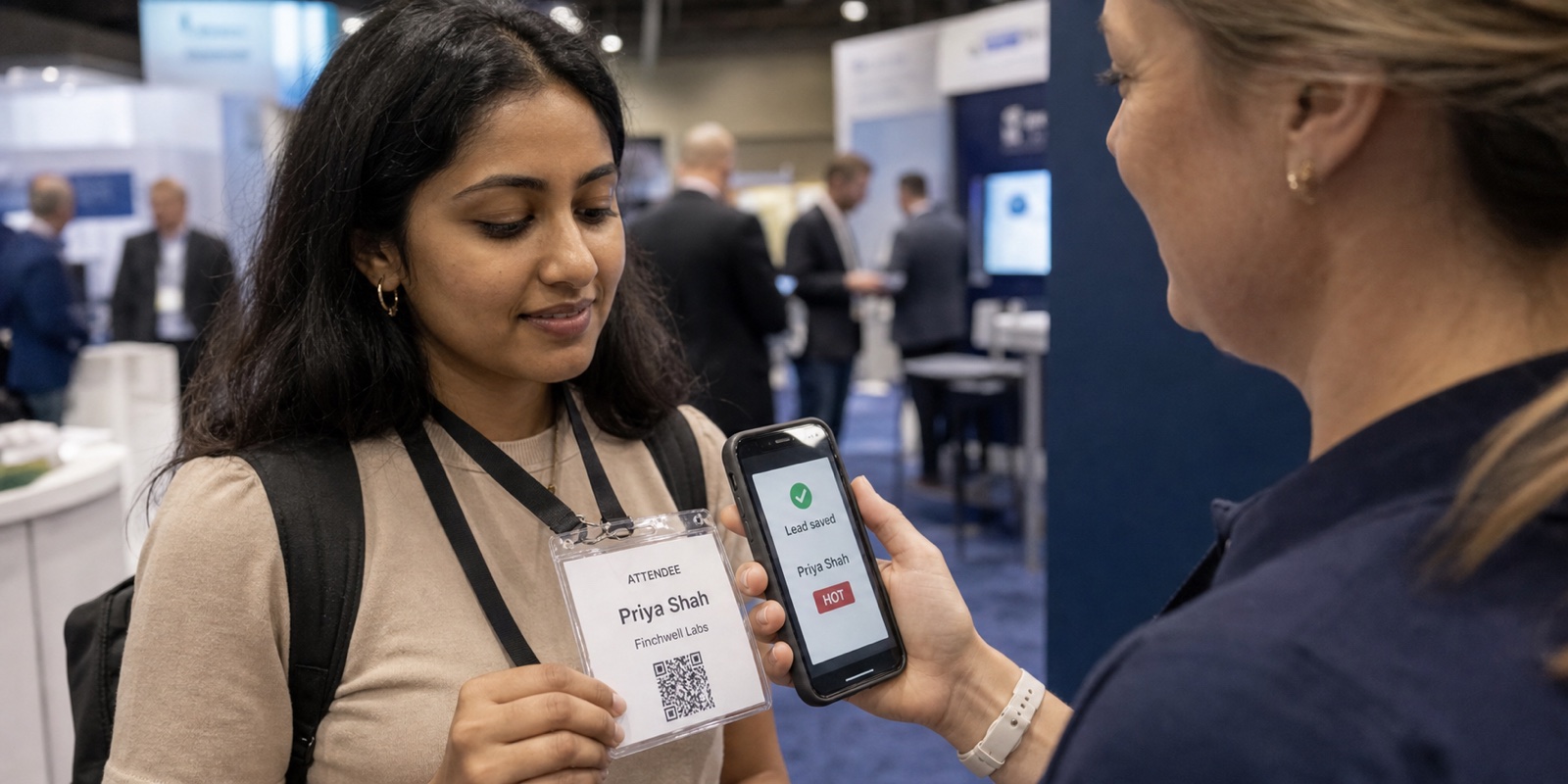
They're three separate jobs. The questions are the conversation, the wording you use to learn role, need, timeline, budget, and fit. Scoring is how you turn those answers into a hot, warm, or cold rating, covered in how to qualify leads at a trade show. Data collection is which fields you record, like email, company size, and current vendor, covered in what information to collect from trade show leads. Good questions feed both, but the wording is its own skill.
Should reps memorize the questions or read them off the app?
Memorize the wording, tap the answers. If a rep reads questions off a screen, the visitor feels processed and the conversation dies. The questions should sound like genuine curiosity, which means they live in the rep's head, not on the iPad. The app's job is to capture the answer in the moment so nothing depends on memory or handwriting. In XPO, the qualifying fields sit right alongside the badge scan, so a rep can ask naturally and tap the response without breaking eye contact for long.
What does a weak answer to a qualifying question look like?
"Just looking" and "my manager sent me" are the classic weak signals. They don't mean a dead lead, but they mean the person is early and probably can't act soon. Other soft answers: no current tool or process for the problem, no timeline, and no sense of who else would weigh in. None of these disqualify someone outright. They just tell you to file the lead as cold or warm rather than hot, and to lead your follow-up with education instead of a demo or a quote.