How to Follow Up on Trade Show Leads Before They Go Cold
A practical trade show lead follow-up plan: why speed wins, a 24-48 hour timeline, tier-based outreach, what your first message needs, and how to measure it.
A prospect who spent five minutes at your booth might talk to a dozen other vendors that same day. By the time they fly home, your conversation is one blur among many, and the window where they remember you, and why they were interested, closes within a few days.
Most exhibitors don't lose leads because the leads were bad. They lose them because the follow-up was slow, generic, or never happened. That's fixable. The plan below covers when to reach out, who gets a call versus an email, what that first message should say, and how to tell whether any of it worked.
Why trade show leads go cold so fast
Trade show interest is fragile. A prospect at a big show might visit 30 or 40 booths, collect a tote bag of literature, and sit through two keynotes, all in one day. The intent that felt real at your booth gets buried under everything else competing for their attention.
There's a practical reason speed matters too. Whoever follows up first frames the conversation. If a competitor emails the prospect the night of the show with a relevant next step and you wait until Monday, you're now the second or third vendor in their inbox, reacting to a buying process someone else already started.
Why the first 24-48 hours of follow-up matter most
The 24-48 hour window is the sweet spot. Reach out the same day and your message often lands while the prospect is still at the show, distracted, or in transit. Wait a week and the urgency is gone and your name is fuzzy. The day or two right after the event is when they're back at a desk, reviewing notes, and still able to picture your booth.
This isn't about blasting everyone the second the hall closes. Be early and relevant at the same time. A fast, specific message beats a fast, generic one, and both beat a thoughtful message that shows up two weeks late.
Clean data and same-day sync make speed possible
Speed sounds simple until you look at what you actually captured. Badge scans come back with typos, missing email domains, half-finished company names, and notes that only made sense in the moment. If your team spends the first three days after the show cleaning a spreadsheet, the window is already closing before a single email goes out.
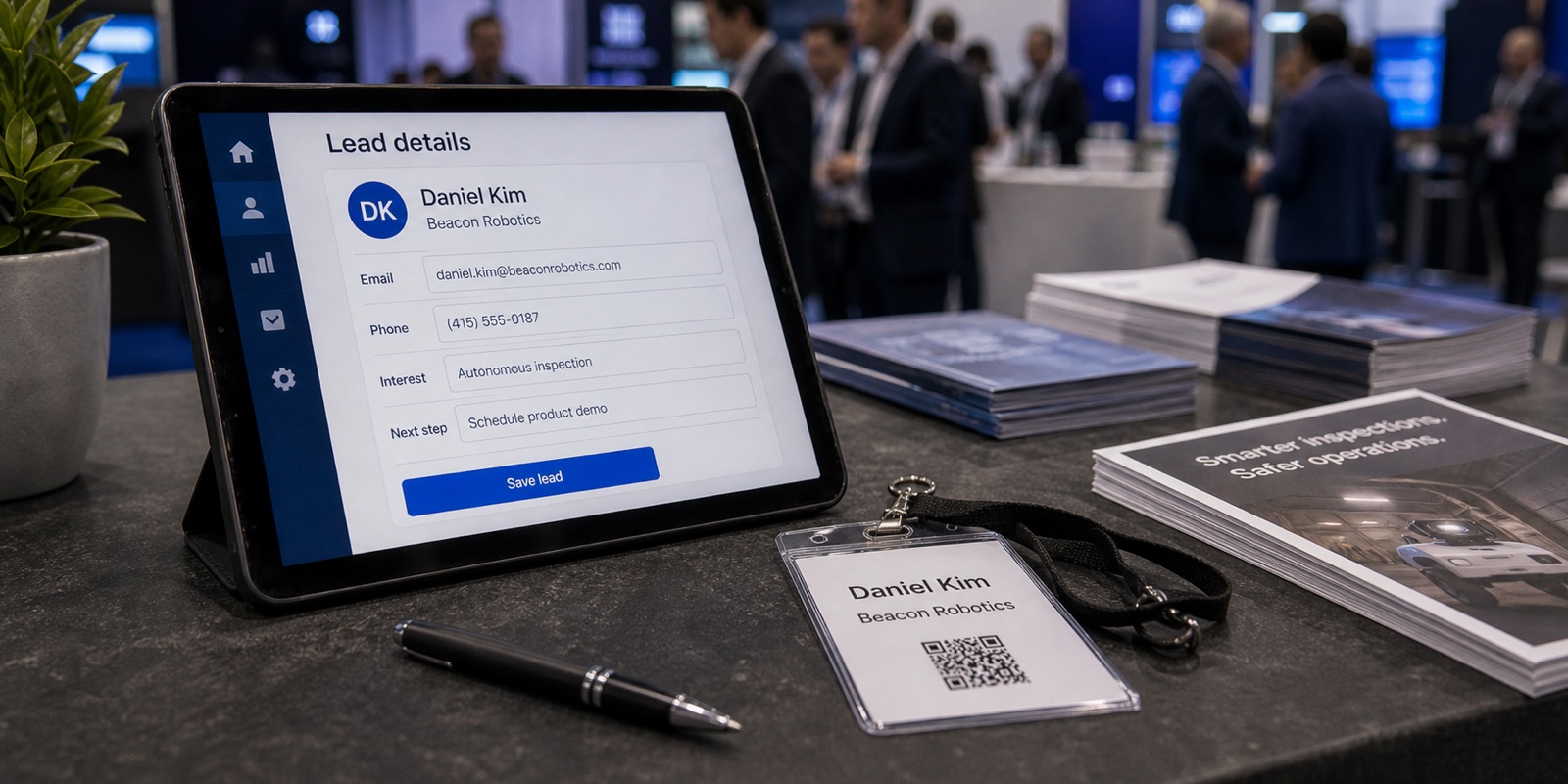
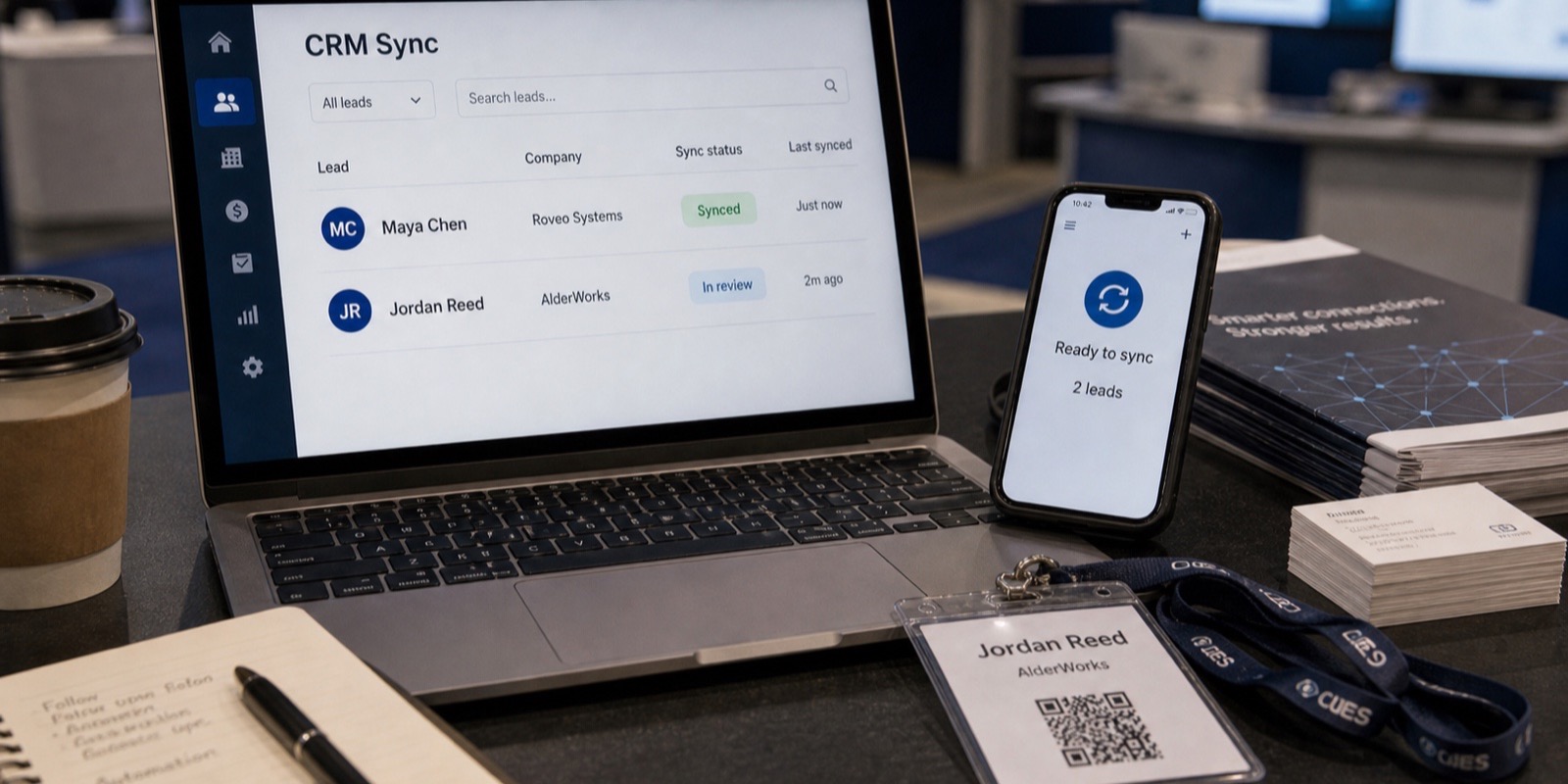
The fix is to capture clean data and get it into your CRM the same day. With XPO, AI cleans up each lead as it's captured, fixing typos and standardizing formatting, and qualified leads sync to your CRM automatically over OAuth with a per-lead sync log. There's no manual cleanup phase, so your reps can start working leads while they're still warm. If you're weighing tools, the best trade show lead capture software guide compares how different options handle capture and CRM sync.
Segment follow-up by qualification tier
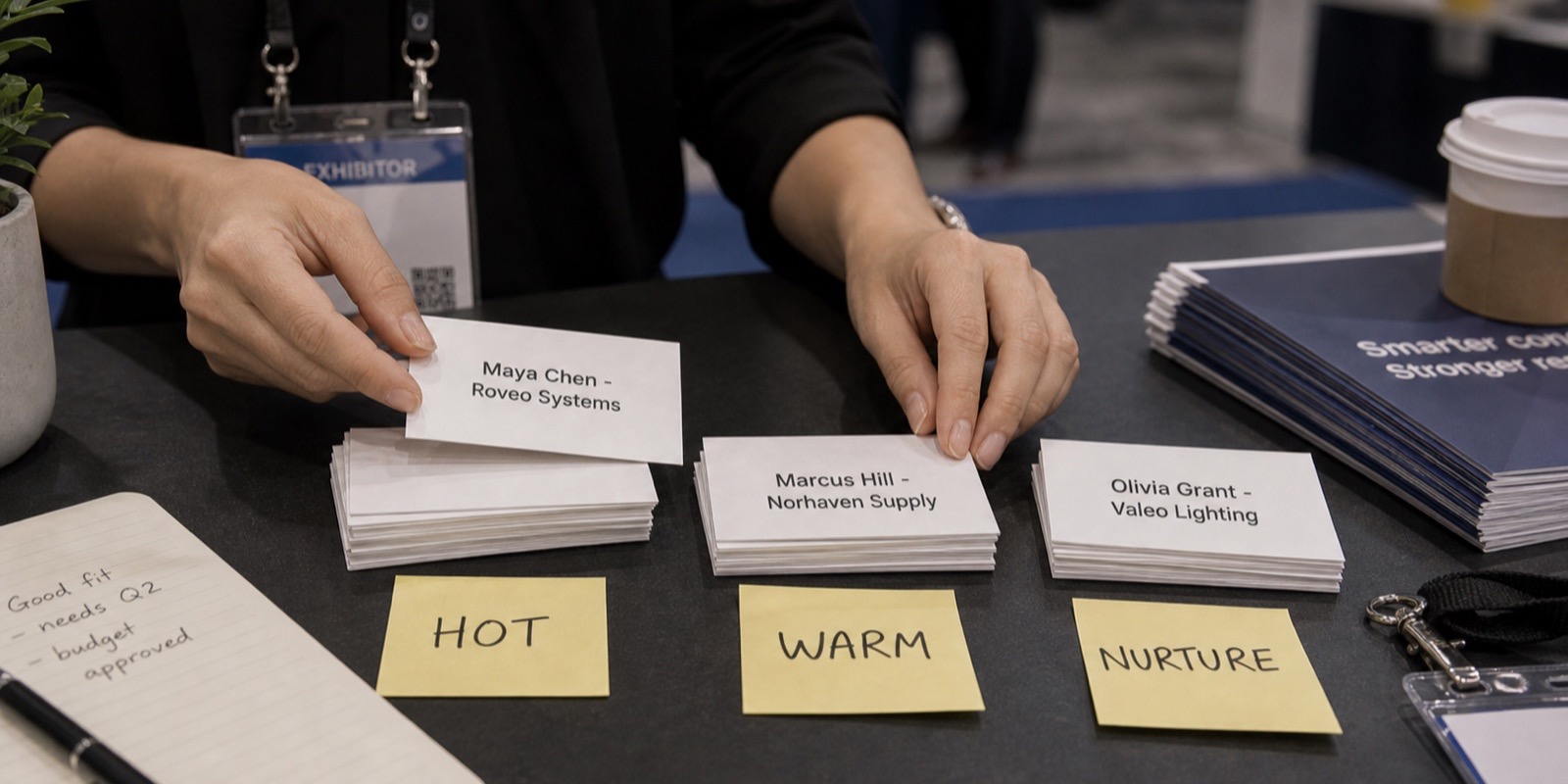
Treating every scanned badge the same wastes your best people's time. A hot lead who asked for pricing and a hand-wave from someone who wanted a free t-shirt shouldn't get the same email. Sort leads into tiers at the booth, then match each tier to an action, and your reps stay focused on the leads worth a phone call.
No way to rank leads as you capture them yet? Set one up before your next show. Qualifying questions in XPO are configured per event (text, number, yes/no, multi-select) and validated as answers come in, so you can tag each lead hot, warm, or cold in seconds. The segmentation work is done before you leave the hall. If you want the underlying logic, the guide on what lead retrieval is and how it works walks through capturing and qualifying in one pass.
| Tier | Signals | First action | Timing |
|---|---|---|---|
| Hot | Asked about pricing, timeline, or a demo; clear fit and authority | Personal call or direct email from the rep, plus a calendar link | Same day to 24 hours |
| Warm | Real interest but no urgency; needs nurturing, or wasn't the decision-maker | Tailored email referencing the conversation; add to a short sequence | Within 48 hours |
| Cold | Light interest, browsing, or unclear fit | Light nurture: one relevant resource, then your normal marketing flow | Within a week |
Match each qualification tier to a follow-up action
What a strong first follow-up message includes
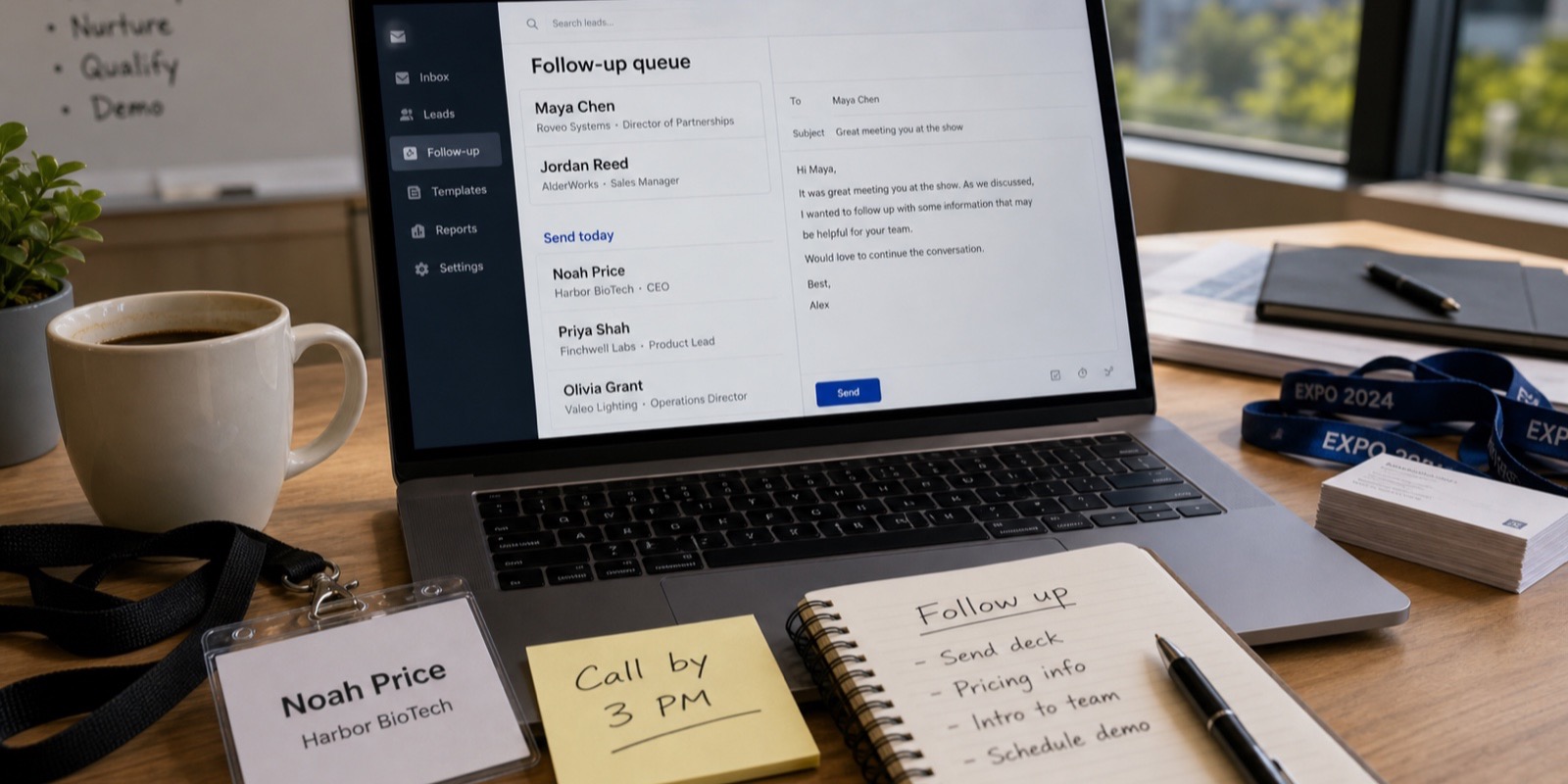
The difference between a follow-up that gets a reply and one that gets deleted is specificity. Your first message has to prove you remember the actual person, not just their badge. That means referencing something real from the conversation and delivering the exact next step you promised at the booth.
- A reference to the real conversation. Name the problem they mentioned or the product they leaned in on. "You said your team is switching off spreadsheets next quarter" beats "Thanks for stopping by."
- The next step you promised. If you said you'd send a case study, pricing, or a calendar link, lead with that. Delivering on a small promise builds more trust than any pitch.
- One clear ask. Book a call, reply with a question, or confirm a fit. One next step, not a menu of five.
- A short, human tone. Skip the corporate template. Write like the person they talked to, because it should be that person.
This is where the notes you took at the booth pay off. If your capture process let you log context per lead, your reps have something specific to write about. Thin notes lead to thin emails. One more reason to think about what to collect before the show, not during it. The lead retrieval guide covers what context is worth capturing in the moment.
A sensible follow-up cadence
One email is rarely enough, and ten is annoying. A workable cadence for a warm lead spaces a handful of touches over two to three weeks, each adding something new instead of just "checking in." Hot leads can move faster and lean on the phone. Cold leads should drop into your standard marketing nurture rather than a sales sequence.
- Day 0-1: First touch. Reference the conversation, deliver the promised next step, make one clear ask.
- Day 3-4: Add value. Send a relevant case study, a short answer to a question they raised, or a quick demo link.
- Day 7-8: Different angle. Try a new format, or a new contact at the account if your first person went quiet.
- Day 14-21: Final direct touch. A short, low-pressure note. No response, move the lead to long-term nurture rather than chasing it.
- After the sequence: Hand cold and unresponsive leads to marketing automation so they stay warm without burning rep time.
How to measure your follow-up
Counting scans tells you how busy your booth was, not whether your follow-up worked. To know that, track what happens after the show. The numbers worth watching are time-to-first-touch, reply rate by tier, meetings booked, and how many qualified leads convert to pipeline.
Time-to-first-touch is the one most teams ignore and the one most tied to results. If your average lead waits five days for a first email, fix that first. A clean post-show report makes this easier: XPO gives exhibitors a post-show report of what the event produced, so you can tie follow-up speed and outcomes back to specific events instead of guessing.
- Time-to-first-touch, measured per lead and as a team average.
- Reply and meeting-booked rates, split by hot, warm, and cold tiers.
- Qualified leads that became real pipeline, and eventually revenue.
- Which events and which booth conversations produced your best-converting leads, so you invest in the right shows next year.
Frequently asked questions
How fast should you follow up on trade show leads?
Send your first follow-up within 24 to 48 hours of meeting the prospect. That window is when they still remember your booth and their reason for stopping by, but are back at a desk and able to act. Hot leads, the ones who asked about pricing or a demo, should hear from a rep the same day, ideally by phone or a direct personal email. The point isn't to be fastest at any cost. It's to be early and relevant together. A specific message that lands in two days beats a generic one that lands in two hours.
Why do trade show leads go cold so quickly?
At a busy show, a single prospect might visit dozens of booths, sit through sessions, and talk to several of your competitors in one day. The interest that felt strong at your booth gets buried under everything else competing for their attention. There's a competitive reason too: whoever follows up first frames the buying conversation. If a competitor reaches out the night of the show and you wait a week, you're arriving late to a process someone else already shaped. Speed and relevance keep you from becoming just another forgotten badge in their stack.
What should the first follow-up message say?
Your first message should prove you remember the actual conversation, not just scanned a badge. Reference something specific the prospect said, the problem they mentioned or the product they were curious about, and deliver the exact next step you promised at the booth, whether that's pricing, a case study, or a calendar link. Keep it short, write it in a human voice, and include one clear ask instead of a list of options. A message built on real booth notes always beats a generic thank-you template, which is why capturing good context during the conversation matters so much.
Should you follow up with every lead the same way?
No. Treating a hot lead who asked for pricing the same as a casual browser wastes your best reps' time and annoys the browser. Segment by qualification tier instead. Hot leads get a personal call or direct email within a day. Warm leads can wait 48 hours for a tailored email and a short sequence. For cold leads, one relevant resource is plenty before they drop into your standard marketing flow. Tagging each lead at the booth makes this fast, so the sorting is finished by the time you pack up, not days later.
Why does CRM sync speed affect follow-up?
Fast follow-up depends on having clean, organized lead data ready to act on the moment the show ends. If badge scans come back full of typos and your team spends three days cleaning a spreadsheet before anyone can email, your follow-up window is closing before the first message goes out. Capturing clean data and syncing it to your CRM the same day removes that bottleneck. XPO cleans each lead with AI on capture and syncs qualified leads to platforms like Salesforce and HubSpot automatically the same day, so reps can start working leads while they're still warm instead of waiting on data cleanup.
How many follow-up emails are too many?
For a warm lead, a handful of touches spread over two to three weeks works well, with each one adding something new instead of just checking in. A common pattern is a first touch in the first day or two, a value-add email a few days later, a different angle around a week in, and a final direct note around two to three weeks out. Past that, move unresponsive leads to long-term marketing nurture rather than chasing them. Adjust to your sales cycle: bigger deals tolerate more touches over a longer window, while small transactional sales should close or close out quickly.