Is Lead Retrieval Technology Worth It for Your First Trade Show?
Is lead retrieval technology worth it for your first trade show? A cost-vs-return breakdown, real scanner prices, and a simple ROI framework for first-time exhibitors.
You've already committed the big money. Booth space, a rented display, flights, a hotel, three people off their normal jobs for most of a week. Then the show's exhibitor portal asks if you want to add a lead retrieval scanner for a few hundred dollars more, and it feels like one upsell too many.
Here's what first-timers miss. The scanner is the cheapest line on the order form, and it's the one that decides whether the rest of the spend turns into pipeline. This post covers what lead retrieval actually costs, the price you pay for skipping it, and whether it pays off at your first show.
What lead retrieval technology actually does
Lead retrieval technology
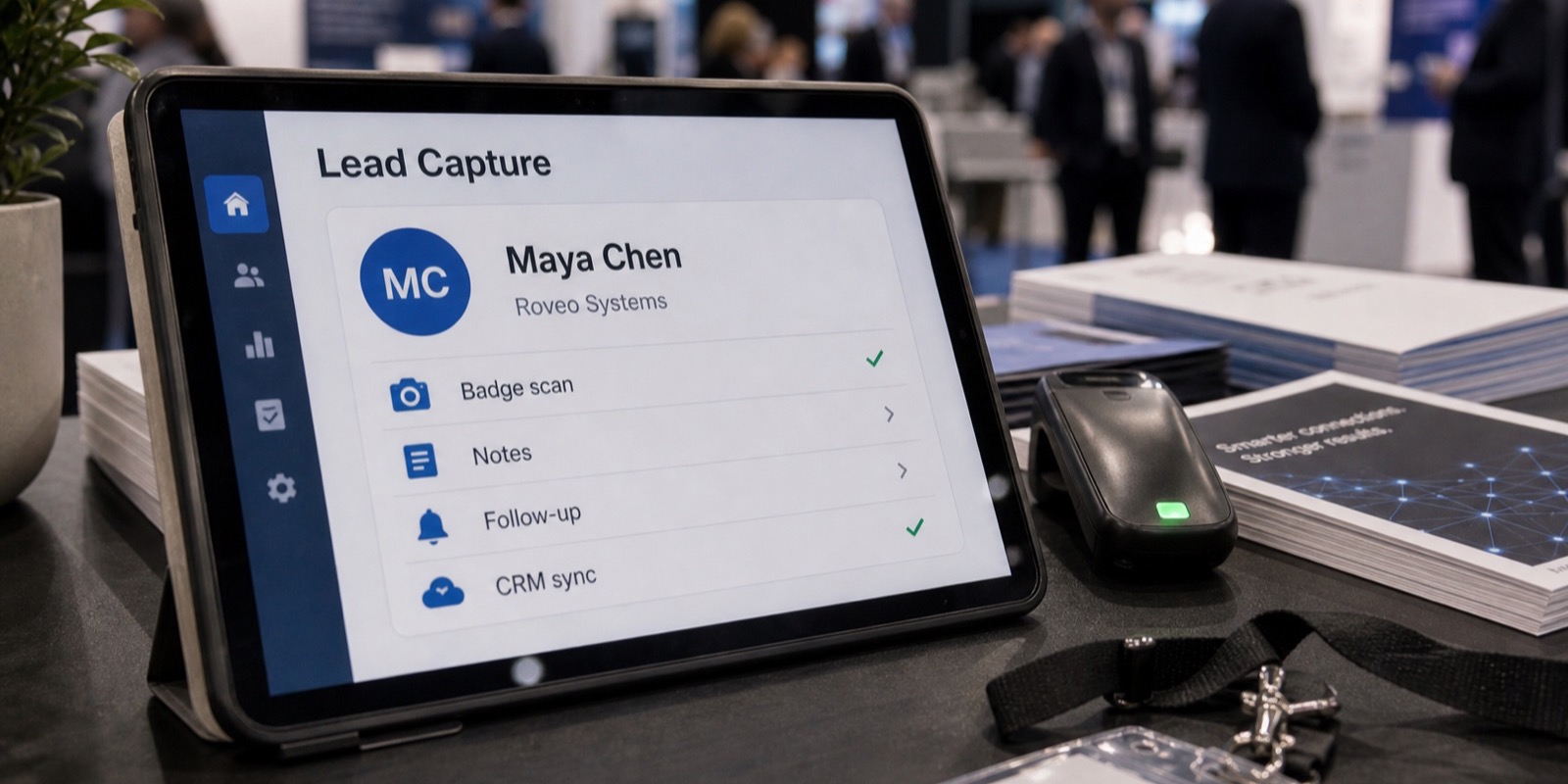
Software or hardware that captures an attendee's contact details from their event badge, so you collect a lead in a couple of seconds instead of writing it down or stapling a business card. It ranges from a rented handheld scanner to an app on your own phone that reads the badge's barcode, QR code, or NFC chip.
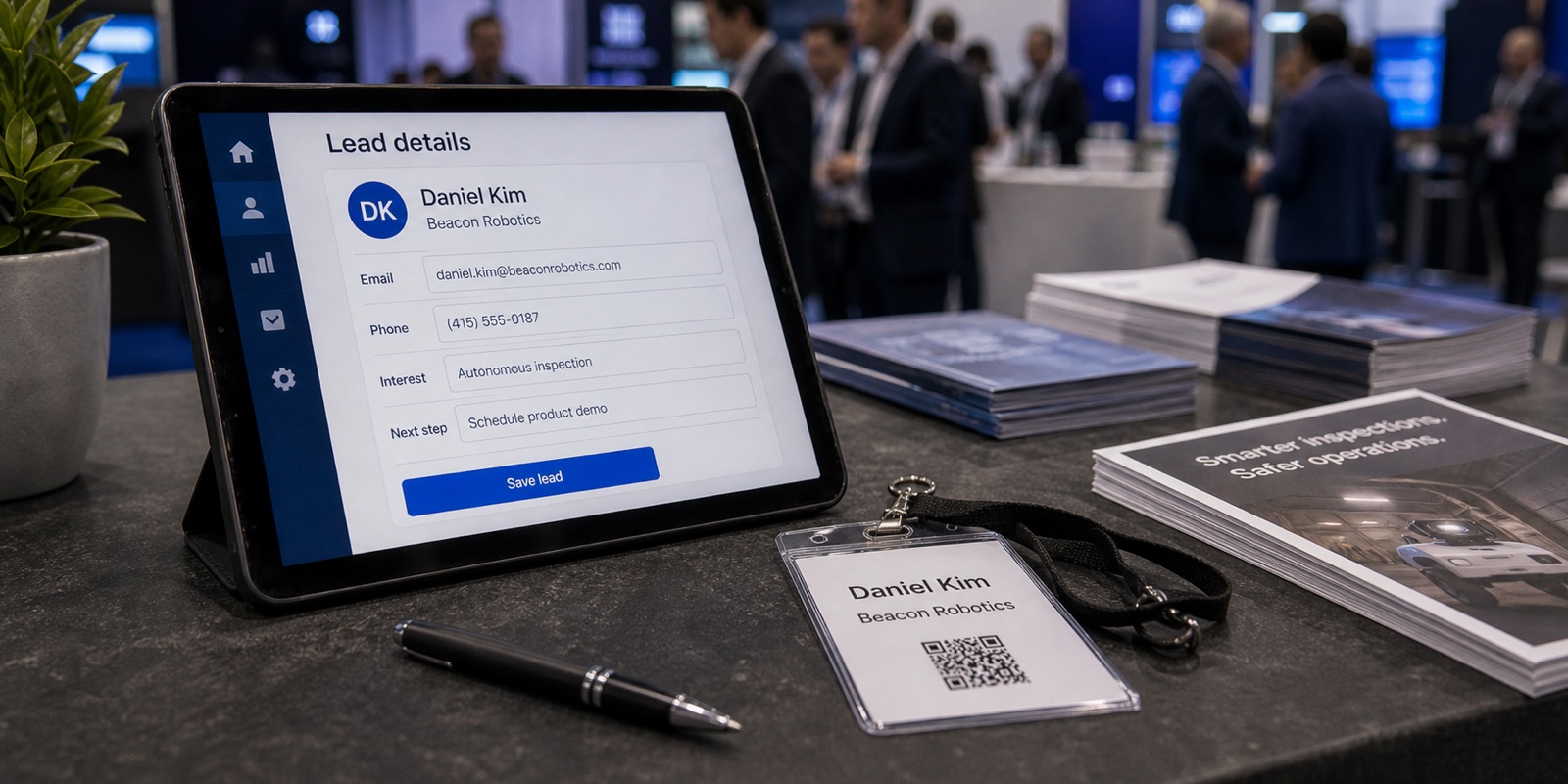
On the show floor it solves one problem: turning a conversation into a usable record before the person walks away. A good system also captures why the lead matters, not just who they are, by letting you tag interest level or answer a few qualifying questions on the spot. If you want the longer primer, XPO's guide to lead retrieval breaks down how badge data and scanning work.
This post isn't about which features to shortlist. We're staying on the money question. If you want the feature side, see XPO's guide to the best trade show lead capture software.
What lead retrieval costs at a typical show
Most shows let the official registration vendor sell lead retrieval, and the price varies by event and how early you order. The numbers below come from real exhibitor order forms, so they're a fair anchor for budgeting your first show.
There's also a cost most first-timers don't see coming: the deposit on rented hardware. Per CompuSystems, a rented scanner returned late can incur a $100 late fee, and a lost unit can cost up to $1,500 to replace. On a busy floor a handheld walks off a table easily, so that's a real risk, not a footnote.
Put it next to the rest of your booth and the scanner stops looking expensive. A modest 10x10 with space, travel, and staff time runs well into five figures. Against that, a few hundred dollars to make sure the leads are actually captured is rounding error.
The hidden cost of not using lead retrieval
Going without isn't free. It just moves the cost somewhere you don't see until after the show, when the energy's gone and the leads are competing with your inbox.
- Manual data entry. A stack of business cards is hours, sometimes a full day, of typing names, emails, and notes into a spreadsheet. That's a paid person not selling.
- Lost and unreadable leads. Cards get coffee-stained, handwriting goes sideways, and the note that said 'hot, call Monday' is now attached to nobody. A share of every paper lead just evaporates.
- No same-day follow-up. The window to reach a trade-show lead closes fast. If your leads are still on paper Friday, the competitor who scanned and emailed Wednesday already owns the conversation.
- Cold, context-free records. Without capturing interest or a qualifying answer at the booth, every lead looks the same a week later, and sales treats them all as junk.
None of these show up on the order form, which is exactly why they get ignored. They show up six weeks later as a thin pipeline and a sales team that quietly decides trade shows don't work.
Renting the official scanner vs your own app vs paper
You usually have three options at a first show. Each has a real tradeoff, and the right pick depends on how many leads you expect and whether you care about the data landing in your CRM.
| Approach | Up-front cost | What you get back | Main tradeoff |
|---|---|---|---|
| Paper and business cards | $0 | Leads, if nobody loses the stack | Hours of typing, lost cards, no same-day follow-up |
| Rent the official scanner | Roughly $375 to $685 per event | Badge data captured on the floor | Tied to one show, deposit risk, data often a basic export |
| Bring your own app | Per-event software fee, no hardware deposit | Captured, deduplicated, qualified leads that sync to your CRM | Needs a vendor that integrates with the show's badge system |
Cost vs return for three first-show approaches
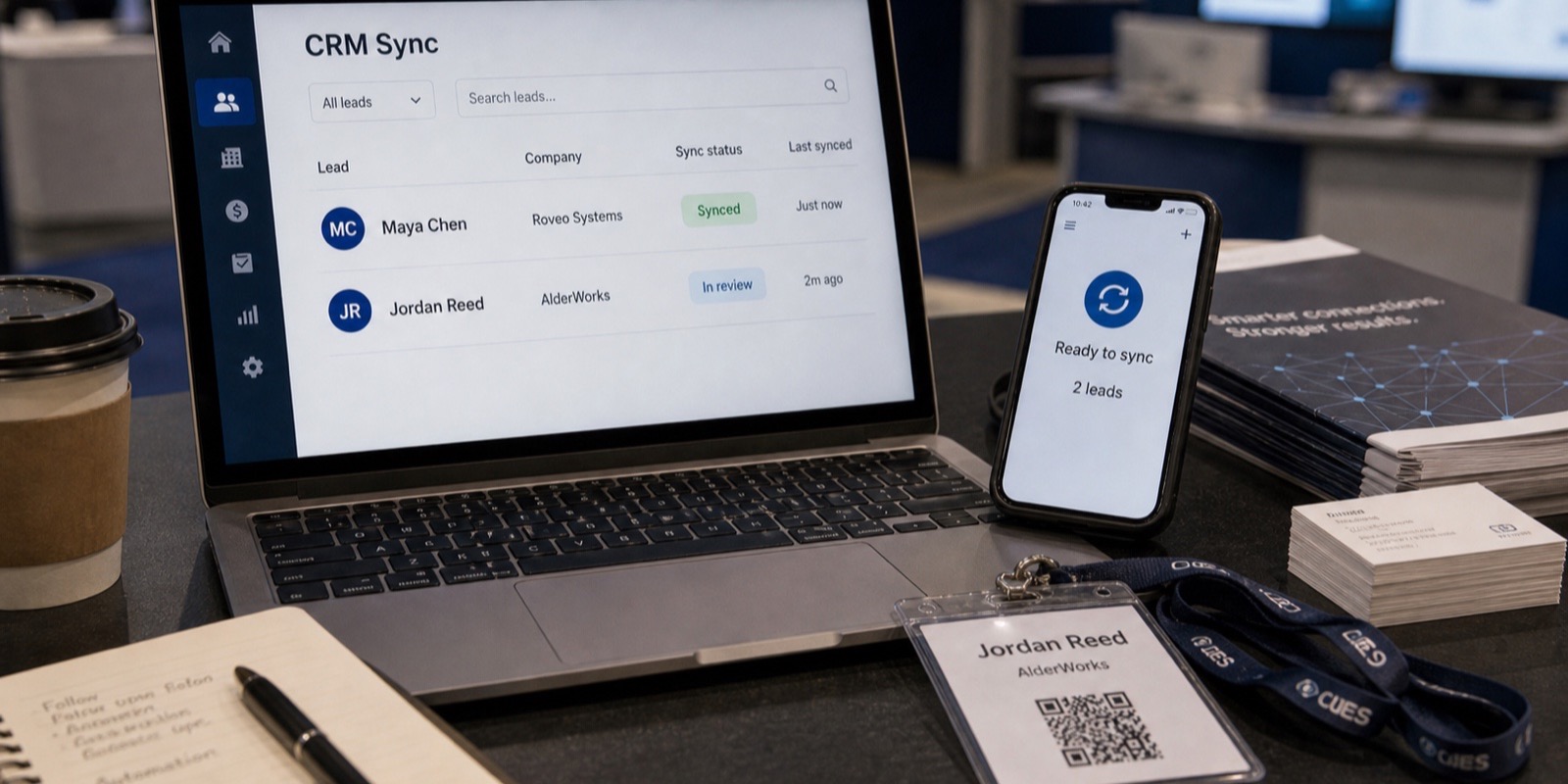
The official rental is the safe default, and for a lot of booths it's all you need. The catch is that it's built for the show, not for your sales process, so you often get a flat list to clean up afterward. Bring-your-own-app trades that for leads that arrive already qualified and routed, which is the part that actually saves time later.
XPO sits in that third lane. Your team scans on an iPhone or iPad, capture works offline and syncs when the signal returns, and a duplicate scan never creates a duplicate lead. It pulls badge data straight from whatever provider the show uses, including Maritz and Event Citadel (formerly CompuSystems), so you're not locked out of the official badge feed. Pricing is $2,500 per event for the whole booth team plus the show's badge developer kit fee, with no per-seat fees or contract and a pilot at one event to start.
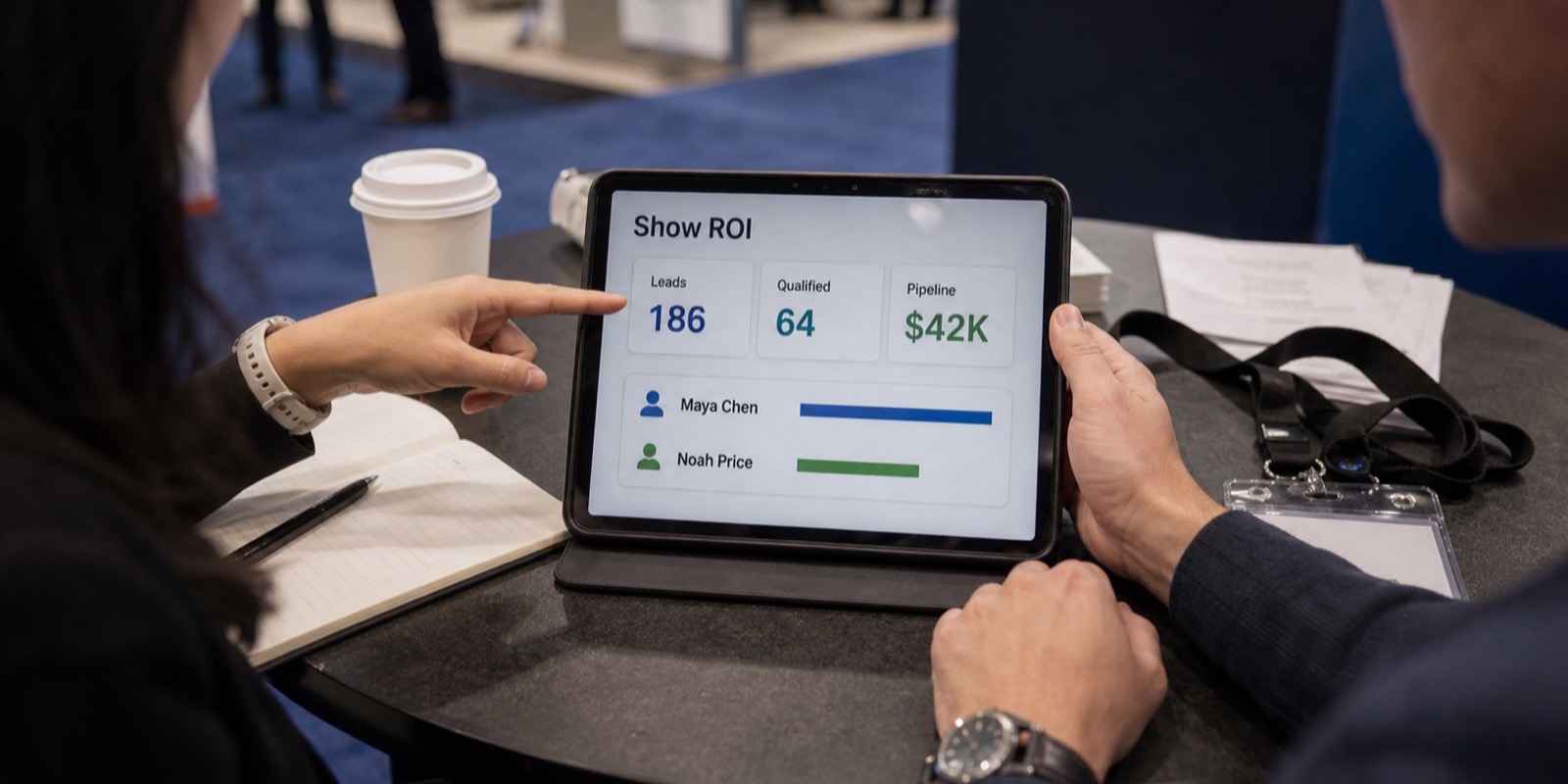
How to estimate ROI before you commit
You don't need a model. You need one honest number: what a closed deal is worth to you. From there the math is fast.
- Add up your full booth spend for the show: space, display, travel, hotel, and staff days. Call that your total cost.
- Write down the value of one typical closed deal, or one year of a new customer if you sell on subscription.
- Divide total booth cost by deal value. That's how many deals the whole show has to produce just to break even.
- Now ask how many clean, followed-up leads it takes to close one deal at your usual rate. Multiply by the break-even number from step three.
- Compare that lead target to what lead retrieval costs. If a few hundred dollars is what stands between you and hitting that target, the decision makes itself.
The reason this works is that scanner cost is fixed and tiny, while the downside of losing leads scales with how good your booth conversations were. The better your show goes, the more it hurts to have captured it on paper.
A simple decision framework for a first show
Here's the short version of when lead retrieval technology is worth paying for at a first event, and the rare cases where you might skip it.
- Worth it if you expect more than a couple dozen conversations, sell anything with a deal size in the thousands, or have a CRM you want leads to land in. That covers almost every B2B exhibitor.
- Worth it if your booth staff also have day jobs. Same-day CRM sync means nobody loses a weekend retyping cards.
- Maybe skip it if you're a single person at a tiny local show expecting a handful of leads you'll call from memory. Even then, your phone's camera and a simple form beat paper.
- Don't overbuild. At a first show you don't need every bell. You need leads that are readable, deduplicated, and qualified enough that sales will actually call them. Decide what to collect from each lead before the show, not after.
If you're torn, run a pilot at one event and judge it on the post-show report rather than the order-form price. XPO is newer to market than the incumbents, so a single-event pilot is a low-stakes way to compare a real capture flow against the official rental before you commit to anything. You can book a pilot or demo for one show and decide from there. If you're still weighing vendors, XPO's guide to lead retrieval covers how badge data and CRM sync fit together.
Frequently asked questions
How much does lead retrieval technology cost for one trade show?
For a typical show, expect a few hundred dollars per event for the official scanner or app. According to Maritz exhibitor order forms (KBIS 2024, PRI Show 2025, and IPPE 2026), official SWAP badge scanners and app packages ranged from roughly $375 to $685 per event depending on the show and how early you ordered, and a developer's kit or API for real-time data was about $950. Third-party apps charge a per-event software fee instead of renting hardware. Watch for hardware deposits too: per CompuSystems, a late return can incur a $100 fee and a lost unit can cost up to $1,500 to replace.
Is it worth paying for lead retrieval if this is my first time exhibiting?
Usually yes. At a first show you've already spent thousands on space, travel, and staff, so the scanner is the cheapest line on the budget. The risk isn't paying for it. It's skipping it and losing leads to smudged business cards, lost notes, and no same-day follow-up. If one closed deal is worth more than the scanner, which it almost always is, lead retrieval pays for itself the first time it saves a lead you'd otherwise have lost. Skipping it only makes sense at a tiny event where you expect a handful of leads you can recall from memory.
Can I just use paper and business cards instead?
You can, and it costs nothing up front, but the bill arrives later. A stack of cards is hours of manual typing, a share of them will be unreadable or lost, and your follow-up won't go out until days after the show, when the lead has cooled. Paper also captures who someone is but not why they mattered, so every record looks the same to your sales team a week later. For a handful of leads at a small local show it's survivable. For a real B2B floor, paper quietly wastes the money you already spent to be there.
Should I rent the official scanner or bring my own app?
Both capture badges. The official rental is the safe default and works fine, but it's built for the show, not your sales process, so you often get a flat list to clean up afterward, plus deposit risk if hardware is lost or returned late. Bringing your own app trades that for leads that arrive deduplicated, qualified, and synced to your CRM, which is where the real time savings are. The one requirement is that your app integrates with the show's badge provider. Tools like XPO connect to providers including Maritz and Event Citadel, so you still get the official badge data.
How do I calculate the ROI of lead retrieval for a trade show?
Compare total booth spend to the value of one closed deal. Add up everything the show costs you: space, display, travel, hotel, and staff days. Then divide by what a typical deal is worth to find how many deals the show must produce to break even. Multiply that by the number of clean leads it takes you to close one deal. If a few hundred dollars of lead retrieval is what stands between you and hitting that lead target, it's an easy yes. The cost is fixed and small. The downside of losing leads grows with how good your booth conversations were.
Does same-day follow-up really matter that much?
Yes, more than most first-timers expect. Trade-show leads cool fast because the attendee is talking to dozens of exhibitors and forgets specifics within days. If your leads are still on paper by Friday, a competitor who scanned and emailed on Wednesday already owns the conversation. Lead retrieval that syncs to your CRM the same day lets you follow up while you're still fresh in the prospect's mind. That timing advantage is a big part of why the technology earns its cost, separate from the time it saves on data entry.